Posted in NaNoWriMo, updates, Writing

NaNoWriMo – the Story so Far

We’re day two of NaNoWriMo and so far, I’m on schedule. A couple of times yesterday I found myself wondering if I was describing a library ‘the correct way’. Now, I have no clue what ‘the correct way’ is but that’s what I thought. I had to perfectly describe my main character’s workplace. It didn’t take me long to realize that I needed to stop overthinking those sentences. The point of NaNoWriMo is to write. I haven’t found anywhere that says those 50k words have to be the best words in existence.

When I realized this, I left a comment on the document; ‘take a look at this later’ and kept writing. It was as simple as that even though it felt like the hardest thing I had to do. I have put this into practice before – leaving a comment to myself – in other works and, for some reason, it bugged me that I had to for this one. Maybe I’m overthinking this because I want my novel for NaNoWriMo to be perfect, but I know that deep down, these 50k words aren’t going to be perfect. I know that and it’s still hard to keep that in mind.

The one thing that has been working for me is the notecards that I wrote up to help me figure out my plot and where I want the story to go. I haven’t planned everything out yet and I’ll do that gradually. However, I don’t want to be solely focused on one way of writing this novel. I want to allow the story to take unexpected turns because if everything is predictable and ‘on one path’, it’s not fun to write anymore. I like to discover new things in my story that I didn’t know before. Plus, sometimes, it’s good to make things up as you go along. You never know what might work.

One thing to keep in mind is to let the characters lead the way. It follows along the lines of ‘what would this character do in this situation?’. In the first drafts, my characters aren’t always developed enough but that’s okay for me. I often tend to develop my character during the very first draft. There are instances when, even though a character isn’t developed, I can tell when a character isn’t acting quite right. In my first draft of Clan of Ash (book 1 of the Half-Blood series), I went through this with my main character.

When I rewrote that draft, I had to take out an entire scene because I knew that this wasn’t how my character would act. Did I know that from the start? No. However, I knew that this wasn’t how I wanted my character to be. Once I figured that out, developing her further was easier. I had an idea of what the character isn’t like and from there, I started to figure out her personality.

Nothing is going to be perfect at the start. At least, it won’t for me. I have a process and it works for me because of all the trials and errors I’ve had along the way. Especially for NaNoWriMo. It is trial and error. It’s a way to discover what works and doesn’t work. In the end, I’m doing what I love and I’m having fun. That’s all that matters. Having fun writing.


Posted in Methods, NaNoWriMo, Writing

Eve of NaNoWriMo

If someone were to ask me if I was ready for NaNoWriMo, I would say no. It doesn’t matter if this was my first time or ten times. I don’t think I would ever be ready to write 50,000 words in 30 days. I’ve done before in the past but it hasn’t been easy. My spare time goes to typing up the daily goal and if I’m lucky, I’ll have enough time in the day to relax before going to bed and getting ready for the next day and all the responsibilities that require my attention.

Thinking back to all my previous attempts of NaNoWriMo (including Camp NaNoWriMo), I have never really written a novel. Not really. I’ve written 50,000 words towards an idea that I really wanted to develop. It’s not a novel until I go in there and try to salvage whatever I can from it. Sometimes, I have to start from scratch. Even though I plan to write the second installation of the Half-Blood series, I won’t be writing a novel. In those 50,000 words, I’m going to try to write something that I can salvage at the end of it all.

While I have experience in writing 50k words in a month, there are some tips that I’ve come to learn that work for me.

  1. Carrying spare paper/notebook. 

I don’t like to limit myself to working on my daily goal only on a computer/laptop. When I get a few moments, I’d like to jot down a couple of sentences here and there. Personally, I like to think about the direction I want the story to go and imagine possible scenes in my head. If end up thinking of a really good scene, I write down a summary of the scene and the key points I want to include just so I won’t forget anything.

2. Time Frame

Choosing a time that I can write is very helpful because I am able to only focus on writing. I’ve never really had to turn my WiFi off but if I had to, I would find an online app that shuts off my internet access until I hit my daily goal. Most importantly, don’t let anyone interrupt your writing time. Once it happens, the ‘golden time’ is subject to change at a moment’s notice. This has happened to me before and I have fallen behind on multiple accounts. Catching up is brutal.

3. Notecards

There are times when I have no idea how the story is going to progress. Writing scenes on notecards have steered me away from writer’s block. I rather have a scene to write than to have nothing. Notecards give me a visual tool to let me rearrange the story as many times as I need without changing anything in the document.

4. Keep Writing

There have been times when I have had no motivation to write. I’ve had to force myself to write. Even if everything made no sense and nothing was coming out like I wanted it to, I kept writing. The goal is to write 50k words. The goal is not to have anything make sense. That comes later. It’s not something you need to worry about now.

5. No Editing

Say no to the voice in your head. Now is the time for creativitity not editing. It’s going to take a few days getting used to it. Even for me but it can be done.

Lastly, for anyone participating in NaNoWriMo, I wish you the best of luck. I’m sure going to need it.

Posted in NaNoWriMo, Writing

After Camp NaNoWriMo

It’s been two weeks since Camp NaNoWriMo has ended.

Final Thoughts?

I was unprepared for the complexity of my story. Even from the beginning, I knew it was going to be complex but I didn’t plan enough for that. Luckily, Camp NaNoWriMo showed me that. Blue Moon is a story that needs to be planned. A beat sheet should, in retrospect, help me write the story better the second time around.

Writing a novel in a month has always taught me something. It has also shown me my limitations and what I need to improve. This time, it was planning and execution. Granted, this was the first draft. The first draft of a book that isn’t even completely written yet. Blue Moon and I have a long way to go before it is ready to shown to the world and I’m okay with that. There’s still a lot for me learn.

On a different note:

I am officially finishing editing and revising my story, Clan of Ash. Now, I’m working on my query letter and searching for agents before sending out queries by September. My summary has to be fixed a bit more and I have to research more agents but I’m close. I’m planning on rereading my novel once more before sending it out. I’m not sure if this is a good idea but I’ll take my chances.

Speaking of reading, I finally got around to reading the books on my kindle. I have a few paperbacks around the house that needed to be read first. Hopefully, I can stop buying books long enough for me to finish reading all the ones I have already. Then again, buying books help authors. The struggle is real.

I’m still working on revising Crimson Queen and Phantom Blade (two stories I have on Wattpad). I have also been working on another story on Wattpad as well. It’s been busy and productive. For now, that’s all I can ask for.

Posted in Methods, Writing

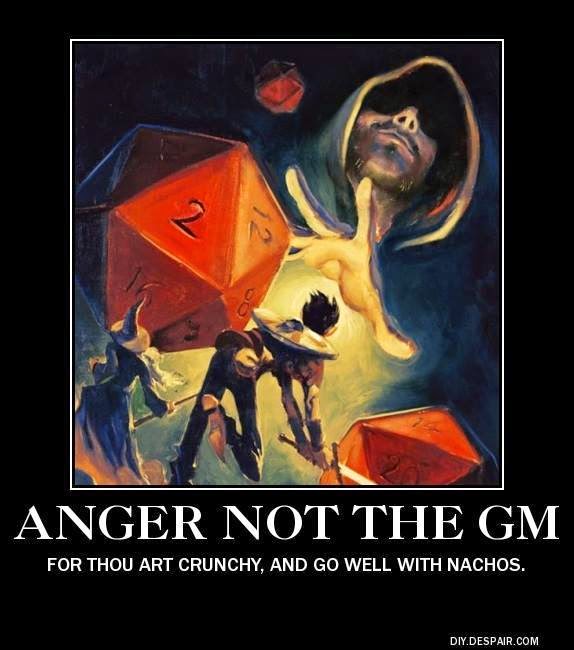
D&D: Writing you own Campaign

1488234_356104684571347_7786573292986058012_n

What’s Dungeons and Dragons have to do with writing a story? Everything.

To those who aren’t familiar with D&D, I’ll give you a quick overview. Dungeons and Dragons is a table-top, fantasy, role-playing game set in the Forgotten Realms. Those familiar with R.A. Salvatore‘s Drizzt Do’Urden might know a little something about the world. For those who don’t know Drizzt then take a look at the popular show Stranger Things. Mike, Dustin, Lucas, and Will played D&D in the pilot of the show and even in the last episode.

The major component about the game is storytelling and that’s where this post comes in. For starters, there is ‘a lot’ to know about playing D&D but I won’t go into too much detail. Instead, I’ll focus on how to build your own campaign for what’s called a ‘home-brew game.’ This term just means that you made a game set in the Forgotten Realms. It can also mean that you created your own world and are simply using the game mechanics of D&D like the dice rolling, the encounters, etc.

I should also mention that I went to Compicpalooza 2017 and was able to take down notes on many of the panels. The topic for this post was selected from my many notes so, in essence, it’ll be an overview of the advice and tips that I received.

  1. There’s no order in building your campaign and that holds true with writing.

You can start with your characters (in this case it can be your NPCs – the many roles you’ll take on as a DM (Dungeon Master – the one who runs the campaign)). If possible, it’s best to add as many NPCs beforehand. If needed, ‘someone’ will exist for your ‘adventures’ to come talk to and you won’t have to manifest them on the spot and remember them later.

Or your world. Or an object players (the ‘heroes’) have to find or destroy. That’s for you to decide.

Perhaps even your antagonist. This can be from anything you really want – a blood mage or a dragon.

However, for those building your own world, the terrain/ the environment is something to keep in mind. Is it mountainous? Plains? Forest? The Sea? The adventure will depend on what kind of area the players have to traverse. Plus, it would also make the encounters (the ‘enemy/beasts) plays will have to fight.

For the world building, you don’t have to know how to draw a map. There are pre-made maps and map generators available. Like donjon; RPG Tools. There are a lot of resources online to make it easier.

2. Basic Fundamentals of the World

The more details you know about your world the better. Just like writing anything, it is best to know almost everything you need to know about your world. That way, you won’t have to make things up on the spot and possibly forget about it later. I’m not saying it’s bad to make things up but I find that it disrupts the flow of the story. Plus, if you do have everything planned then it makes the world seem more real. Not only that but if you know the relationships between towns or tribes then you can use that as a source of conflict (if needed).

3. Managing your players

It’s not really a rule of thumb but your players are what makes the story. As the DM, you create the story and basically, the players help you write it. The story may go on a different path that you intended but it’s okay. Plans are subjected to change. It’s not like the story went out the window or anything. The DM is there to help guide the players through the story. There has to be some level of control but don’t force them to stay on that path only. Let them explore.

Whatever you don’t use then recycle it for another adventure. I do that in writing all the time. I can’t use something in one story but if I can use it in another story, then I will.

Like any story, there are going to character backstories. As a DM, you can use these to create a different arc or build it into the story. Just give your players something to care about. That’s what the core is for any story. Keep them invested.

Final thoughts:

Have fun. If you’re not having fun then why would your players be?Don’t get caught up in the details. They’re more like guidelines.

Posted in Resources, Writing

Self-Publishing 101

I like to thank Sara Rothman for allowing me to upload her presentation over self-publishing. I attended her panel at Anime Matsuri 2017 and found her presentation very informative and decided to share that information with everyone. Sarah Rothman has written An Otaku Abroad: The Affordable Japanese experience for Anime and Manga fans. For more information, you can visit her website here. She has a book, Suicidal Samurai, coming out in May that, if anyone is interested in, can pre-order here.

In this post, I’ll be going over some of the main points discussed in the presentation. I will also upload the entire document on my blog. You can find it here.

So, to begin with:

Self-publishing is basically where an author publishes their own book, independently, without the involvement of a third-party publisher and at their own expense. The author has a lot of control but have to do all the work themselves like marketing, PR, format, price etc. There’s also outsourcing where the author can have someone else do, for example, the marketing part of the process.

There are advantages and disadvantages to self-publishing.

Advantages:

  • Easy to do
  • Control
  • Outsourcing
  • No Gatekeepers

Disadvantages:

  • Personal costs
  • Negative stigma
  • Lots of competition
  • Dealing with bookstores

There are more advantages and disadvantages and those can be found on the presentation.

Next,

Where to start?

It’s helpful to know why you’re writing. Money? Status? Bragging rights? For fun? I think, in essence, each motivation will help with the process and how much time and effort you’re willing to put into a story.

It’s also important to write A LOT. You can publish a book if you haven’t finished it. You may have heard it plenty of times but write every day. Even if what you wrote today can’t be used at all, at least you’re staying in the habit and practice. I honestly believe that practice makes perfect.

  Editing

It’s nice to read through a story multiple times. Read it once for grammar, another for story, etc. If you try to find all the problems at once, I feel that will get complicated so focus on one thing at a time. It’s also helpful to read it out loud or use audio reading software. Another tip, have another set of eyes. I find it helpful when I have someone else read my story because they might catch something I didn’t. And remember, it’s your book so you make the decision on what to delete or keep.

(A few)  Self-Publishing Websites:

  • Amazon.com
  • Lulu.com
  • Ingram Spark
  • Smashwords (ebook only)

A bit more information:

Choose your cover design carefully. People to judge books by their covers.

The pricing for ebooks and printed books will vary. There’s also distribution costs to take into account.

The business of self0publishing is always changing.

Niche books tend to well.

Marketing is touch and requires effort. Social media and freebies help.

Build your email list.

Always keep writing. The more books you have out there, the higher the chance there is of one book hitting it big. Also, the more books you have publish, the more money you can have coming in.

Lastly,

Slow and steady. Self-publishing, and writing in general isn’t something to get rich off straight away. It takes time and effort. Don’t be discouraged. If something isn’t working then change it until it does.

Thanks for reading. Like I mentioned before, this is just a basic summary of the presentation. You can have the full document here.